Efficiency (OPT-POWER-ADV)
This chapter describes the Efficiency Computation feature. It is designed for analyzing DC power and mechanical power. The DC power analysis is done via voltage and current, while mechanical power is measured with speed and torque sensors, in the same calculation period. It calculates power, average speed, average torque and efficiency regarding the electrical power. In case of electrical excitation of the machine, excitation voltage and excitation current can be entered here and taken into account for the efficiency calculation.
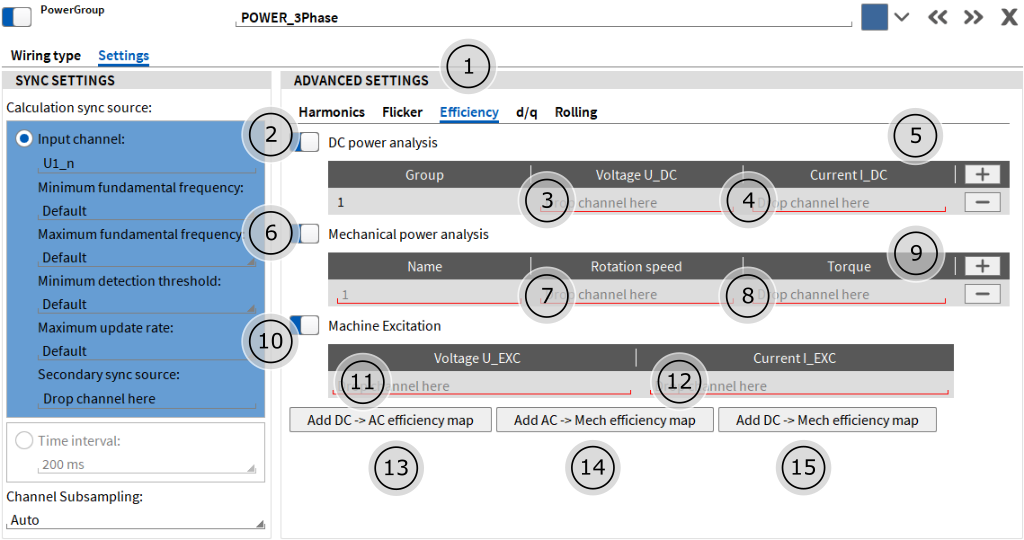
Fig. 55 Detail Settings in OXYGEN Power Group
Details Tab for Settings of Efficiency calculation.
Enable/Disable DC power analysis.
Input field for DC voltage channel (unit must be V).
Input field for DC current channel (unit must be A).
Button to add DC power analysis group. Voltage & Current Pair (up to 6)
Enable/Disable Mechanical power analysis.
Input field for rotation speed channel (unit must be rpm or U/min).
Input field for torque channel (unit must be Nm).
Button to add Mechanical power analysis group. (up to 6)
Enable/Disable Machine Excitation.
Input field for Machine Excitation voltage channel (unit must be V).
Input field for Machine Excitation current channel (unit must be A).
Button for creation of a DC power to AC power efficiency map module (Matrix Sampler).
Button for creation of an AC to Mechanical power efficiency map module (Matrix Sampler).
Button for creation of a DC to Mechanical power efficiency map module (Matrix Sampler).
Channel Reference
Symbol |
Equatiom |
Description |
|---|---|---|
|
– |
Samplerate (may differ from electrical input channels) |
|
|
Number of Samples in calculation cycle |


P_mech
This is the mechanical power, updated every calculation cycle given by calculation sync source (same as electrical power).
![\begin{aligned}
P_{mech} &= \frac{1}{N} \sum_{n=0}^{N} speed[n] \cdot torque[n] \cdot \frac{2 \cdot \pi}{60} & Unit: \mathbf{W}
\end{aligned}](../_images/math/c37a78174161347316237135673ad02a0e328a61.png)
n_mech
This is the rotational speed average, updated every calculation cycle given by calculation sync source (same as electrical power).
![\begin{aligned}
n_{mech} &= \frac{1}{N} \sum_{n=0}^{N} speed[n] & Unit: \mathbf{rpm}
\end{aligned}](../_images/math/8810ae8e86d9fd5617091465c2ced7e152e45b83.png)
M_mech
This is the mechanical torque average, updated every calculation cycle given by calculation sync source (same as electrical power).
![\begin{aligned}
M_{mech} &= \frac{1}{N} \sum_{n=0}^{N} torque[n] & Unit: \mathbf{Nm}
\end{aligned}](../_images/math/654623764a7334075c6774351c77f0df1db0ed60.png)
Eff_DC_AC
This is the efficiency of the inverter, related by the DC power input to the AC power output, updated every calculation cycle given by calculation sync source (same as electrical power).

With  being total AC active Power.
Eff_mech
This is the efficiency of the Motor, related to electrical power input, updated every calculation cycle given by calculation sync source (same as electrical power).

With being total AC active Power. In case the Machine Excitation is not used  is zero.
Eff_sys
This is the efficiency of the system, related by electrical DC power intput to mechanical power output, updated every calculation cycle given by calculation sync source (same as electrical power).

In case the Machine Excitation is not used is zero.
Attention
In case of more groups for  or
or  (see 5 and 7) or refers to the sum of power of these groups respectively.